

Benefits of Outpatient TMS Therapy for Anxiety Explained

Quick Summary
Outpatient TMS therapy is a non-invasive treatment that uses magnetic pulses to stimulate brain areas involved in mood regulation, and it is generally performed without anesthesia or sedation. Evidence for anxiety is smaller and still developing than evidence for depression. Patients should confirm coverage and what the device is cleared for before starting.
Sessions are generally performed without anesthesia or sedation, and many patients resume usual activities afterward.
Most TMS research has focused on major depressive disorder, while anxiety evidence is smaller and still developing.
There is no single anxiety protocol, as studies vary in target, frequency, intensity and session count.
Anxiety is not uniformly an FDA-cleared indication, so ask your clinician what the device is cleared for.
Confirm insurance coverage and prior-authorization requirements in writing before the first session.
Is outpatient TMS right for your anxiety?
Newtown TMS offers physician-administered TMS therapy and a free consultation.
Table of Contents
What Outpatient TMS Therapy Is and How It Works
Last Updated: November 8, 2026
Outpatient TMS therapy is a non-invasive treatment in which a magnetic coil placed against the scalp sends short magnetic pulses to nerve cells in the brain. Outpatient TMS is generally performed without anesthesia or sedation, and many patients are able to resume usual activities after each session.
Transcranial magnetic stimulation (TMS) is a procedure that uses magnetic fields to stimulate areas of the brain thought to regulate mood. Repetitive TMS, often called rTMS, delivers these pulses in a series over repeated sessions.
The treatment is generally described as targeting the prefrontal cortex, a region involved in emotional regulation. Repeated stimulation is thought to encourage neuroplasticity, the brain's ability to adjust its activity over time.
TMS Research for Anxiety: What the Evidence Shows
Most TMS research has focused on major depressive disorder, and the anxiety evidence base is smaller, more heterogeneous, and still developing. That distinction matters when you are deciding whether outpatient TMS is a reasonable option for an anxiety diagnosis rather than for anxious feelings that accompany another condition.
What the evidence actually covers
Published reviews and meta-analyses generally fall into two groups. The first examines TMS for diagnosed anxiety disorders, most often generalized anxiety disorder, panic disorder, social anxiety disorder, and obsessive-compulsive disorder. The second examines anxiety symptoms that occur alongside depression, post-traumatic stress disorder, or other conditions. These are not interchangeable: a trial that measures a drop in a depression scale's anxiety subscore is not the same as a trial enrolling people whose primary diagnosis is an anxiety disorder. When you read a summary, check which population was enrolled, which rating scale was used, and whether anxiety was the primary or secondary outcome.
A 2019 review indexed in PubMed Central review on transcranial magnetic stimulation for anxiety reported that most participants receiving 25 rTMS sessions had a clinically significant decrease in anxiety symptoms. That review's search summary does not provide sample sizes or percentages, so the finding should not be read as a guaranteed outcome. A separate summary describes a 2023 meta-analysis of 14 randomized controlled trials that reported significant anxiety-symptom reduction after TMS; the summary does not provide the pooled effect estimate, so readers should look at the full study before drawing firm conclusions.
Protocols and regulatory status vary
There is no single "anxiety TMS protocol." Studies differ in stimulation target (commonly the dorsolateral prefrontal cortex, but sometimes other sites), coil type, frequency, intensity, pulse pattern (for example, conventional repetitive TMS versus intermittent theta-burst stimulation), number of sessions, and whether treatment is delivered alone or alongside medication or psychotherapy. A protocol that showed benefit in one trial may not have been replicated in another.
Regulatory status also varies by indication. In the United States, the Food and Drug Administration has cleared certain TMS devices for specific uses, and anxiety is not uniformly among them; clinicians may therefore discuss TMS for anxiety as an off-label or adjunctive option depending on your diagnosis and history. Ask your clinician directly what the device is cleared for and what the basis is for using it in your case.
How to read the numbers realistically
Response and remission figures reported in the literature depend heavily on the study population, the rating scale, the definition of response, and the duration of follow-up. A trial that enrolls treatment-resistant adults and measures change on a clinician-rated scale may report different results than an open-label clinic series. Most practitioners find that some patients improve meaningfully, some improve partially, and some do not respond, which is why a consultation should include a frank discussion of realistic expectations rather than a promise of symptom relief.
Evidence for TMS in depression is considerably stronger than evidence for anxiety. The Mayo Clinic overview of transcranial magnetic stimulation describes the treatment as sometimes used for depression. Anxiety-specific results should therefore be considered promising but not yet equivalent to established depression evidence.
Watch out: summaries that quote a single percentage without naming the study population, rating scale, and follow-up period can make anxiety outcomes look more settled than the underlying evidence supports.
The anxiety evidence is smaller and still developing, so the key details to check in any summary are these.
Evidence point | What the article states | What to check |
Most TMS research | Focused on major depressive disorder | Anxiety evidence is smaller |
2019 review | Most participants with 25 sessions had a clinically significant decrease | No sample sizes or percentages given |
2023 meta-analysis | 14 randomized controlled trials | Pooled effect estimate not provided |
Protocols | Vary by target, coil, frequency, intensity and sessions | No single anxiety protocol |
FDA status | Anxiety not uniformly a cleared indication | Ask what the device is cleared for |
What an Outpatient TMS Session Involves
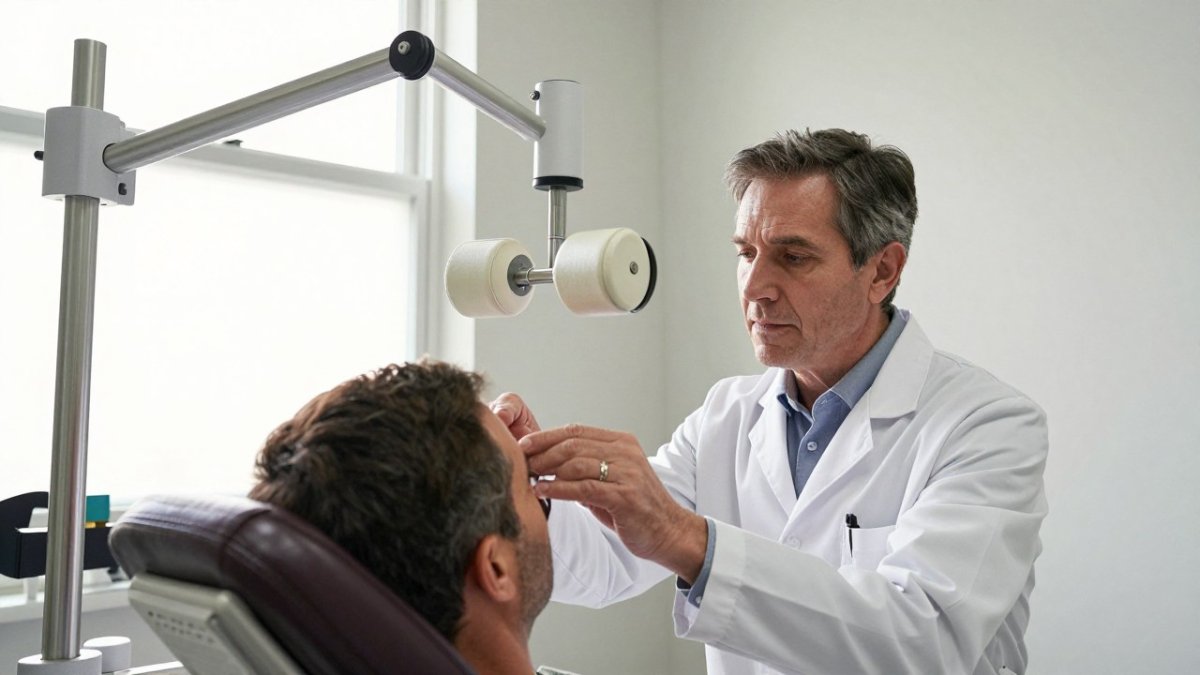
A typical outpatient session is short and takes place in a clinic. The patient sits in a reclined chair while a clinician positions a coil against the scalp. Patients may hear a clicking sound during each pulse, and some feel tapping or light discomfort on the scalp.

Sessions are typically scheduled on a regular basis over several weeks. Because no sedation is generally used, many patients can return to usual activities the same day.
How Long TMS Treatment Takes Before Results Appear
Treatment is delivered as a course of sessions, and the number of sessions varies by patient and by treatment plan. Results are not guaranteed, and some patients notice changes earlier than others. A clinician can explain what to expect for an individual case during a consultation.
TMS Therapy Safety and Side Effects to Expect
TMS is generally considered noninvasive and does not involve surgery or general anesthesia. The most commonly described effects are scalp discomfort at the stimulation site and temporary headache. Seizure risk is a recognized but uncommon concern, which is why a clinician screens each patient for contraindications before treatment begins.
Anyone considering TMS should discuss their full medical history, including any history of seizures, implanted metal devices and current medications, with a qualified clinician.
TMS for Anxiety Insurance Coverage and Access
Coverage for TMS depends on the individual plan, the diagnosis, and the documentation your clinician submits, so patients should confirm coverage directly with their insurer before starting treatment. Review TMS therapy cost and payment options to see how costs are typically structured. The practical questions below are the ones that most often determine whether outpatient TMS is feasible.
What coverage usually hinges on
Most commercial plans and Medicare contractors that cover TMS tie coverage to specific criteria, commonly a confirmed diagnosis, a documented history of prior treatment, and a required number of failed or inadequate medication trials. Because anxiety is not uniformly a cleared indication, a plan may cover TMS for depression but deny it when anxiety is the primary diagnosis, or may cover it only as an adjunct to another treatment. Ask the insurer three things in writing: whether the specific diagnosis is covered, what prior-treatment documentation is required, and whether prior authorization is needed before the first session.
Referrals and documentation
A referral from a psychiatrist or other treating clinician is a common starting point, and the clinician's letter often carries the prior-treatment history the insurer wants to see. Keep records of medication trials, doses, durations, and reasons for discontinuation; missing documentation is one of the most frequent reasons a prior authorization stalls. If a plan denies coverage, ask for the specific criteria cited and whether an appeal or peer-to-peer review is available.
Out-of-pocket cost categories
Even with coverage, patients typically face cost sharing. The categories to ask about include the consultation or psychiatric evaluation, the prior-authorization process itself, the per-session charge, the mapping or motor-threshold session that often precedes treatment, and any charge for the coil or device. Because per-session charges and plan cost sharing vary widely, ask for a written estimate of your responsibility before the first session rather than relying on a general quote. Patients should check the official Centers for Medicare & Medicaid Services coverage resources or their own insurer for current rules, as coverage details change.
Access barriers to plan around
Outpatient TMS requires repeated visits over several weeks, so travel distance, parking, time away from work or school, and dependent care all affect whether a course of treatment is realistic. Some clinics offer flexible scheduling or early and late appointments; ask about this during the consultation. Rural and small-metro patients may find fewer clinics with the equipment and trained staff, and waitlists can lengthen the timeline. A common pattern is for patients to confirm insurance and scheduling before committing, because a coverage approval that arrives after a long wait can still leave a practical access problem.
Watch out: a verbal "it should be covered" from a front-desk representative is not the same as a written prior authorization, and starting treatment before authorization is confirmed can leave you responsible for the full charge.
Booking Your Free Consultation to Discuss TMS for Anxiety
If you are weighing outpatient TMS for anxiety, a conversation with a qualified clinician is the best next step. A consultation can review your history, answer questions about the research, and explain what treatment would involve. Book a free consultation to talk through your options with a physician.
Frequently Asked Questions
How effective is TMS in treating anxiety?
Research on TMS for anxiety is still developing. A 2019 review reported that most participants receiving 25 rTMS sessions had a clinically significant decrease in anxiety symptoms, and a 2023 meta-analysis of 14 randomized controlled trials reported significant anxiety-symptom reduction. Neither study guarantees individual results, and response varies from person to person. Anyone considering TMS should discuss expected outcomes with a qualified clinician who can review their history.
Is TMS for anxiety covered by insurance?
Coverage depends on the specific insurance plan, the diagnosis on record, and the treatment history documented by the provider. Many plans have specific criteria for TMS, and approval is not automatic. Patients should contact their insurer to ask about benefits, prior authorization requirements, and any out-of-pocket costs before starting treatment. Contact the Newtown TMS office to ask about billing questions and what to expect for costs.
Is TMS therapy safe?
TMS is a noninvasive treatment that generally does not require anesthesia or sedation, and patients can usually drive and resume most daily activities afterward. Common side effects reported in clinical settings include scalp discomfort at the treatment site and headache. Because individual health history matters, anyone with implanted metal, seizure history, or other medical concerns should be screened by a physician before starting.
How long does it take for TMS to work for anxiety?
Treatment is typically delivered as a course of repeated outpatient sessions, and timelines for noticing change vary between individuals. Patients often ask how this fits around work and family commitments. Scheduling details and the expected length of a course should be confirmed with the treating clinic, which can explain how sessions are planned for each patient.


Comments