

TMS Therapy for Chronic Depressive States: 2026 Guide

Table of Contents
When Chronic Depressive States Outlast Medication
What Counts as a Chronic Depressive State
TMS for Persistent Depressive Disorder
Who TMS Is and Isn't Right For
TMS Treatment Duration for Depression
Fitting Sessions Around a Work Schedule
TMS Side Effects and Risks
TMS vs Antidepressants for Chronic Depression
Why Physician-Administered TMS Changes the Experience
What TMS Therapy for Chronic Depressive States Looks Like at Newtown TMS
Frequently Asked Questions
Last Updated: October 5, 2026
When Chronic Depressive States Outlast Medication
Chronic depressive states are forms of depression that persist for two years or longer, often resisting multiple rounds of antidepressant treatment. This guide from Newtown TMS examines how TMS therapy for chronic depressive states works, who it’s for, and what a full course of treatment actually involves. For anyone who has cycled through medication after medication without lasting relief, the question is no longer whether to try something else, but what.
The scale of that problem is larger than most people realize. The National Institute of Mental Health's overview of major depression notes that depression is among the most common mental health conditions in the country, and a meaningful share of cases do not respond fully to the first, second, or even third medication tried. That gap is exactly where TMS therapy enters the conversation.
What Counts as a Chronic Depressive State
A chronic depressive state is depression that lingers, typically for two years or more, rather than arriving in distinct episodes with recovery in between. Clinicians often describe this as persistent depressive disorder, and it can range from mild but unrelenting to severe.
What separates a chronic state from a single depressive episode comes down to duration and pattern:
Symptoms present most of the day, more days than not, for at least two years
Brief periods of relief that never last more than a couple of months
Functional decline that accumulates slowly, making it hard to pinpoint when things changed
Repeated medication trials that produce partial responses at best
A common mistake is assuming that because the symptoms are "milder" than a severe episode, they matter less. In practice, the opposite is often true. Years of low-grade depression erode careers, relationships, and self-trust in ways that a short severe episode may not.
TMS for Persistent Depressive Disorder
Transcranial Magnetic Stimulation (TMS) for persistent depressive disorder uses an innovative focused magnetic pulses to stimulate under active regions of the brain, offering an alternative when medications have not delivered lasting relief. The treatment is non-invasive and does not require anesthesia.
Here is how it works. A specialized type of magnetic pulse that is generated by a TMS coil placed against the scalp passes through the skull and stimulates under active areas of the prefrontal cortex, a region tied to mood regulation. The U.S. Food and Drug Administration's information on transcranial magnetic stimulation recognizes TMS as a highly researched, safe and effective treatment option for depression that has been cleared for use to help patients who have not improved with prior antidepressant therapy.
For people stuck in a chronic, unrelenting pattern of depression, this matters because it targets the condition through a different mechanism than medication does.
Who TMS Is and Isn't Right For
TMS suits people whose depression has not responded to one or more antidepressants, who want to avoid systemic medication side effects, or who prefer a treatment that does not involve daily pills. Candidacy is always determined through a clinical evaluation, not a self-assessment. Insurance companies cover TMS but almost always require a prior authorization process to document the patient has tried multiple medications that have not worked enough.
People with certain implanted metal devices in or near the head, a history of seizures, or specific neurological conditions need careful screening, and a physician will determine whether TMS is appropriate. This is a conversation for a qualified professional, not a checklist.
Watch Out Skipping the screening step is the most common and most serious mistake. A thorough evaluation catches contraindications that a quick online quiz cannot, and it protects you from a treatment that may not be safe for your situation.
TMS Treatment Duration for Depression
TMS treatment duration for depression typically runs about 7 weeks, with each session lasting roughly 10-20 minutes. The exact schedule is set by the treating physician and adjusted based on how you respond.
Most patients attend sessions five days a week during the initial course. Because the sessions are short and require no sedation, a person receiving TMS can return to work or daily activities immediately afterward. Some patients continue with maintenance sessions after the initial course to help sustain improvement.
Fitting Sessions Around a Work Schedule
Scheduling is one of the most practical concerns for working adults, and it is more manageable than most people expect. Because a session takes only minutes and needs no recovery time, early-morning appointments usually fit around a normal workday.
A workable approach looks like this:
Book the same time slot each weekday to build a routine
Tell your employer only what you are comfortable sharing; the appointments are brief
Plan for the full course rather than sporadic attendance, since consistency gives the maximum results
Patients who plan their calendar before starting tend to complete the course more reliably.
TMS Side Effects and Risks
Side effects with TMS are uncommon. When they do happen, the most commonly reported are scalp discomfort at the treatment site and mild headache during or shortly after sessions. If they occur at all, they are short lived and occur less frequently as treatment continues. Serious complications are extremely uncommon but do exist, and they are discussed during evaluation.
Understanding the realistic profile helps set expectations:
Side Effect | How Common | Typical Duration |
Scalp discomfort | Common if treatment strength is not monitored by a physician | Eases over first sessions |
Mild headache | Common if treatment strength is not supervised by a physician | Hours after session |
Tingling or twitching | Occasional | During the pulse |
Lightheadedness | Less common | Brief, after session |
Seizure | Rare | Requires screening to assess risk |
No treatment is risk-free, and anyone describing TMS as having no risks at all is oversimplifying. The honest position is that TMS has a well-characterized side effect profile, and a physician-administered setting is designed to screen for and manage the rare serious events. At Newtown TMS, the treatment is tailored made for each patient and personally administered by Dr. Woodall. This personalized care makes side effects very uncommon.
TMS vs Antidepressants for Chronic Depression
TMS vs antidepressants for chronic depression is not a contest with one universal winner. Antidepressants work well for many people and, for now, remain the first-line of treatment. TMS becomes relevant when medications have not delivered adequate relief or when their side effects are intolerable. (Of note, because of the superior performance of TMS over medications, insurance companies are considering it as a first line treatment.)
The differences that matter most:
Mechanism: Antidepressants act on brain chemistry; TMS stimulates a targeted brain region through a magnetic pulse to stimulate under-active brain regions associated with depression.
Side effects: Antidepressants create side effects in well over 80% of people taking them such as weight changes, sexual dysfunction, agitation, anxiety, insomnia and fatigue; TMS side effects are typically localized to the scalp and head and are very short lived, if they occur at all..
Daily routine: Antidepressants are a daily pill; TMS is a scheduled course of 36 in-clinic sessions.
Response timeline: Both take weeks to show full effect, though individual responses vary. Often, results are seen in days with TMS.
For someone who has tried two to four medications without a lasting result, adding another pill to the pile often feels futile. That is precisely the situation where a non-medication option deserves serious consideration.
Pro Tip If you have failed two or more adequate antidepressant trials, ask specifically about TMS rather than accepting another medication switch by default. The treatment history itself is often what makes you a candidate.
Why Physician-Administered TMS Changes the Experience
Physician-administered TMS means a doctor personally oversees your treatment rather than delegating it to technicians. That distinction shapes everything from the initial evaluation to how your protocol is adjusted along the way.
At Newtown TMS, care is led by Dr. John Woodall, a former Harvard faculty member, and every treatment is 100% physician-administered. That is not a marketing detail. It means the person making clinical decisions about your protocol is the same person who knows your history, your medication trials, and how you are responding week to week.
For patients who have been passed between providers, that continuity is often the difference between feeling like a case number and feeling like a patient.
What TMS Therapy for Chronic Depressive States Looks Like at Newtown TMS
TMS therapy for chronic depressive states at Newtown TMS begins with a thorough evaluation, followed by a personalized treatment plan that pairs physician-administered TMS with talk therapy. The goal is not just symptom reduction but a durable return to daily life.

Here is what to expect from the first visit onward:
A full clinical review of your history, including prior medications and how you responded to them
A candid discussion of whether TMS is appropriate for your situation
A clear schedule for the treatment course, built around your work and life
Ongoing check-ins to track response and adjust the plan
Dr. Woodall's background and the practice's physician-led model are why patients describe their experience in terms like, "I made more progress in a few months than I had made in years of other therapies." You can review the practice's approach and reach out directly through Newtown TMS's official site to ask questions before committing to anything.
The setting matters as much as the technology. The same TMS device in a rushed, technician-run clinic feels very different from a physician-led practice where someone knows your name and your history.
Chronic depressive states wear people down precisely because they never fully lift, and years of medication trials can make hope feel unreasonable. If that describes where you are, a different approach is worth a real conversation.
Frequently Asked Questions
Can TMS help with chronic depression?
TMS therapy is cleared by the FDA for major depressive disorder, including cases that have not responded to multiple antidepressants. Chronic depressive states, sometimes called treatment-resistant depression, are exactly the population most studied for TMS. It does not work for everyone, and outcomes vary, but for many patients who have cycled through several medications without lasting relief, TMS offers a non-invasive option worth discussing with a physician who can assess your specific history.
Is TMS used to treat persistent depressive disorder?
TMS for persistent depressive disorder is a common clinical use, though the FDA clearance specifically covers major depressive disorder. Persistent depressive disorder, formerly called dysthymia, involves depressive symptoms lasting two years or longer. Many physicians prescribe TMS off-label for this condition when medications have not produced adequate relief. A consultation with a TMS provider can clarify whether your symptom pattern and treatment history make you a reasonable candidate.
How long does a course of TMS treatment take?
A typical TMS treatment duration for depression is six to eight weeks, with sessions five days per week. Each session lasts roughly 20 to 40 minutes, depending on the protocol. Some patients notice improvement within two to three weeks; others need the full course before feeling a shift. Maintenance sessions may be recommended after remission to reduce the chance of relapse. Your physician will tailor the schedule to your response and availability.
What are the side effects and risks of TMS?
The most common TMS side effects and risks are scalp discomfort at the treatment site and mild headache during or after sessions. These usually ease as treatment continues. Rare but more serious risks include seizure, which is why screening for seizure history and other neurological conditions matters. TMS does not carry the weight gain, sexual dysfunction, or sedation often associated with antidepressants. Your physician will review your full medical history before clearing you for treatment.
How does TMS compare with medication for long-term depression?
TMS vs antidepressants for chronic depression comes down to mechanism and side effect profile. Antidepressants work through chemical pathways and often require weeks to take effect, with side effects that some patients cannot tolerate. TMS uses magnetic pulses to stimulate underactive brain regions and does not circulate through the body. For patients who have failed multiple medication trials, TMS may be recommended before considering more invasive options. Neither approach is guaranteed, and some patients benefit from combining both.
Can depression return after TMS treatment?
Depression can return after any treatment, including TMS. Studies show that many patients who achieve remission maintain it for months or longer, but relapse is possible. Maintenance TMS sessions, sometimes called taper treatments, can help sustain results. Combining TMS with ongoing talk therapy and lifestyle support also appears to improve long-term outcomes. If symptoms return, a physician can reassess and discuss whether another course of TMS or a different approach makes sense.
Do I have to keep doing talk therapy if I start TMS?
You are not required to continue talk therapy to receive TMS, but many physicians recommend combining both. TMS addresses the neurological side of depression; talk therapy helps with coping patterns, relationships, and the psychological habits that depression reinforces. At Newtown TMS, care combines TMS with personalized talk therapy, which some patients find accelerates progress. If you have done therapy before without benefit, that does not rule out TMS. The two work differently.
What happens during a TMS treatment session?
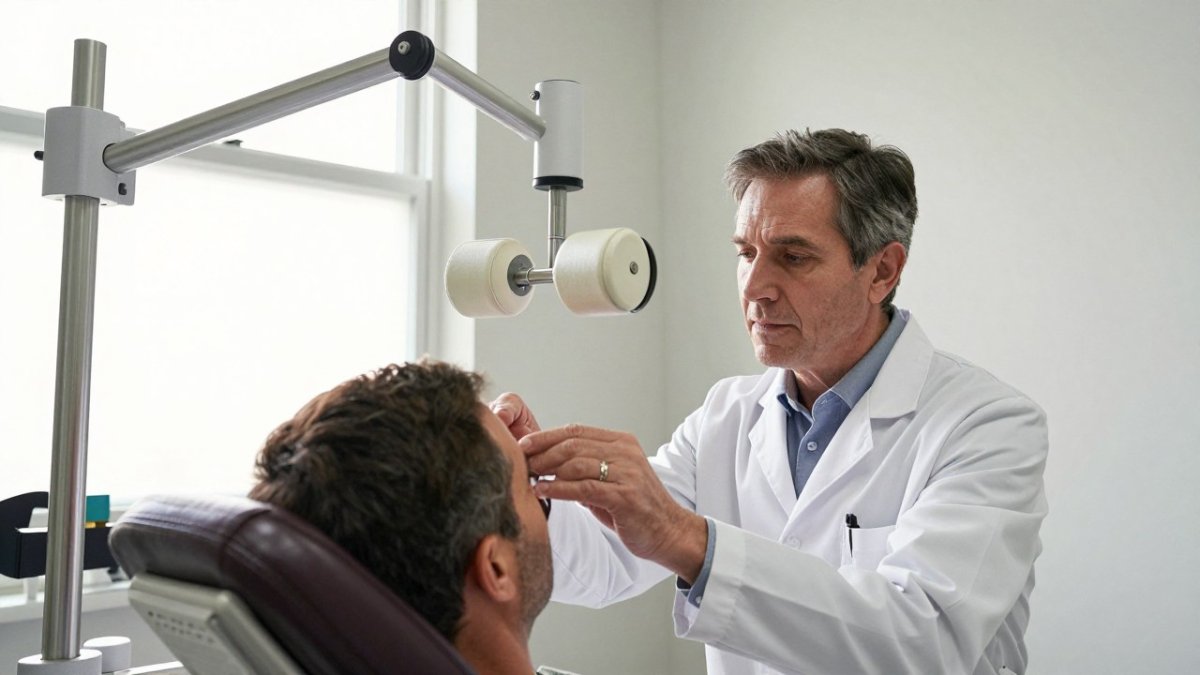
You sit in a reclining chair while a treatment coil is positioned against your scalp. The device delivers magnetic pulses that you hear as clicking sounds and feel as tapping sensations. Sessions typically last 20 to 40 minutes. You can drive yourself home afterward and return to work the same day. Most patients read, listen to music, or simply relax during treatment. The physician adjusts the coil placement and pulse strength based on your motor threshold, determined during an initial mapping session.
Call Newtown TMS for a free consultation


Comments